Observations!
Thursday, May 21, 2015


Monday, May 18, 2015

Friday, May 8, 2015

Friday, May 1, 2015
Apod 4.5

As the 3-km wide comet moves closer to the Sun, heat causes the nucleus to expel gas and dust. The Rosetta spacecraft arrived at the comet's craggily double nucleus last July and now is co-orbiting the Sun with the giant dark iceberg. Recent analysis of data beamed back to Earth from the robotic Rosetta spacecraft has shown that water being expelled by 67P has a significant difference with water on Earth, indicating that Earth's water could not have originated from ancient collisions with comets like 67P

Friday, April 17, 2015


Thursday, April 2, 2015

Friday, March 27, 2015

Tuesday, March 24, 2015
Monday, March 23, 2015

Friday, March 6, 2015

Apod 3.7
Do you know what this is? It is a Dust Devil on Mars, which is a small whirlwind or air vortex over land, visible as a column of dust and debris. We started track this storm back in 2012, and now it's really picked up. It's plume reaches about 20km above the surface and has speeds up to 110km per hour. It is just insane, a dust devil on mars mengaroo.
Wednesday, March 4, 2015
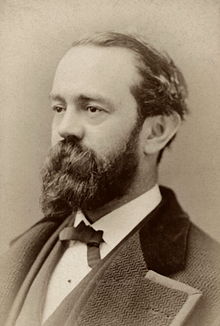
Henry Draper Biography
1839 March 3rd, Henry Draper was born in Prince Edward County, Virginia. Henry Draper was born in a wealthy family, and was grateful for that his whole life. His father John William Draper was a well-established doctor and chemist at New-York University. Draper's mother was the former Antonia Coetana de Paiva Pereira Gardner. His family moved to New York when he was at the age of two.He was stimulated by his parent's amazing work. Henry Draper was stimulated by his parent's work. He pursued excellence and innovation, and even though he worked in the medical field, as did his father and brother, he actually desired to be an astronomer. He was Henry Draper was a NAS member, medical doctor, and one of America's oustanding "amateur" scientists. In 1857, at age 20 he graduated from New York University School of Medicine. Later he worked as a physician at Bellevue hospital. Then after working as a physician, he went on to become a professor and a dean of medicine at New York University. However he wanted to pursue astronomy, and became one of the biggest pioneer's of astrophotography, and he specialized in a type of photography for recording images of astronomical objects in the sky. Henry Draper married Anna Mary Palmer in 1867, and proved to be an excellent assistant to him and a hostess. In 1872 he took a stellar spectrum that showed absorption lines and many of his colleagues preceded him. One year later he resigned from his position at the medical department to continue in his own research on astrophotography. Another year later he directed an expedition to capture the transit of Venus and was the first person to photograph the Orion Nebula. Some of his more notable achievements and awards include: an honorary law of degree, a Congressional medal for directing the U.S. expedition to photograph the 1874 transit of Venus, and even having a small lunar crater named after him. In the fall of 1882 he resigned as a professor, so that he ensured himself free time to pursue in his studies. He embarked on a hunting trip two months later and was exposed to severe cold on the mountain. Five days later he died (1882) from a disease called pleurisy,which is a lung infection. After his death Henry's wife funded the Henry Draper medal in honor of his outstanding contributions to the astronomy world. Around 40 years later after his death, the Henry Draper Catalogue was created giving spectroscopic classification for 225,000 stars and even later extended in 1937 classifying over 350,000 stars! Henry Draper was a major contribution to the astrophysics world, and it would not be the same without him.
Resources:
Resources:
http://www.daviddarling.info/encyclopedia/D/Draper_Henry.html
http://www.nasonline.org/about-nas/awards/henry-draper-medal.html
http://www.nasonline.org/publications/biographical-memoirs/memoir-pdfs/draper-henry.pdf
http://tinyurl.com/pyuywl8
http://tinyurl.com/pyuywl8
Monday, March 2, 2015
Planetary Nebula Blog

CAT - EYE NEBULA
Magnitude of 8.1, Apparent Magnitude 9.8
3000 Light years away from Earth
Size: 2/10 of a light year

Ring Nebula
Maginitude of 8.8
2300 Light years away from Earth
Size: 1.3 Light years

The Egg Nebula
Magnitude of 14
3000 light years from Earth
Size: .2 Light years

Eye Shaped Planetary Nebula
Magnitude of 6.7
700 light years from Earth
.7 Light years across

Gomez Hamburger Nebula
Magnitude of 8.8
900 light years away from Earth
.3 Light years across

Butterfly Nebula
Opiuchus is in this nebula, aswell as scorpio
Considered a bipolar nebula
2100 light years away from Earth
.8 Light Years

Crab Nebula
Taurus constellation is in this nebula
Apparent Magnitude of 8.4
6500 light years from Earth
8 light years across

Eskimo Nebula
Apparent Magnitude of 10.1
2870 light years away
.34 light years in size

Eagle Nebula
M16
7000 light years away
Pillars of creation
Contain a young open cluster of stars
5.5 Million years old
.4 Light years in size

Horse Head Nebula
Monoceros Unicorn constellation
1500 light years away from Earth
Horse's head is given off from the gas and dust
.2 light years
Monoceros Unicorn constellation
1500 light years away from Earth
Horse's head is given off from the gas and dust
.2 light years
Friday, February 27, 2015

Friday, February 20, 2015

Subscribe to:
Posts (Atom)