Friday, February 6, 2015

See Explanation.
Moving the cursor over the image will bring up an alternate version.
Clicking on the image will bring up the highest resolution version
available.


Apod 3.3
This is photograph of Jupiter, with some significant points pointed out. Jupiter is a gaseous planet, with very little density. More than a 100x larger than the Earth, however almost being 4x as less dense due to the gasses. The colored points on the picture are moons orbiting the planet. Some being almost the size of earth and some being the size of it's moon. Jupiter is a fascinating planet and I can't wait to learn more about it's interesting facts and details!!!

Friday, January 30, 2015


See Explanation.  Clicking on the picture will download
 the highest resolution version available.

Apod 3.2!
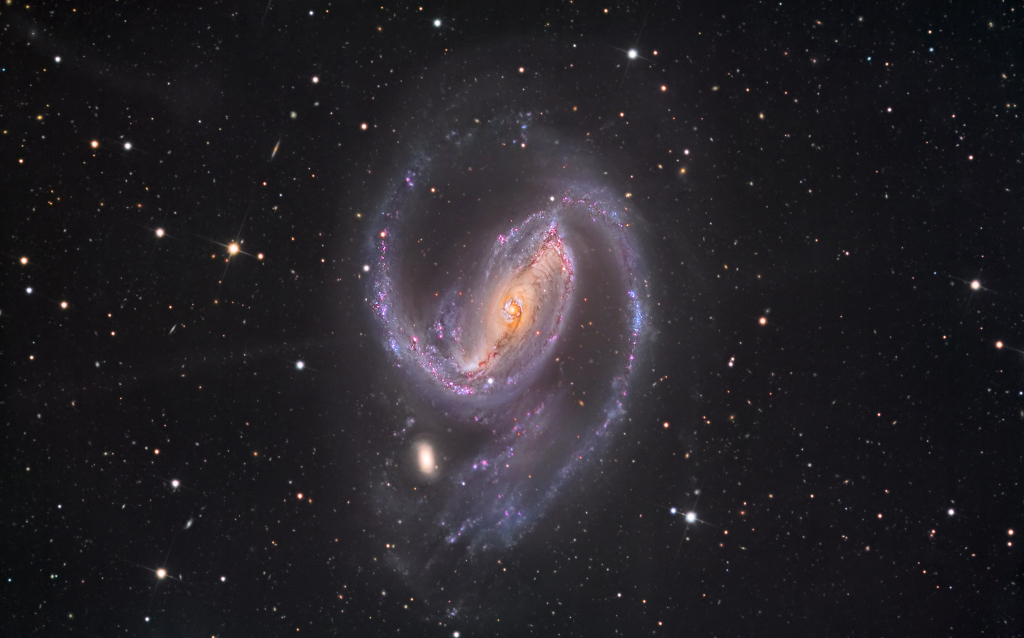
This is a spiral galaxy about 45 million light years away. It is called NGC 1097. This galaxy lies in the constellation Fornax. The pinkish color comes from the stars being meshed into this master-piece. A quite crazy fact is that the center of this galaxy harbors a black hole!!! This galaxy also has alot of jet traces, recognized to be in the nucleus  as well, but we have determined they have not originated from there. Perhaps some neighboring stars. Overall i found this galaxy's shape quiet and interesting and found alot of facts i hadn't known before!

Friday, January 16, 2015

APOD 3.1
See Explanation.  Clicking on the picture will download
 the highest resolution version available.
Venus and Mercury at Sunset
Our astronomy teacher, Mr. Percival, has aware-d us throughout this week and the last that Mercury and Venus were going very visible. Even last week where the the two planets seems like they touched for a brief period of time. It is quite clear which one of the bright glowing objects is Venus, as it is the 3rd most brightest object in the sky. In the morning or in the afternoon is the most prime rib time to view these planets. I recommend you do,as did i


Sunday, January 11, 2015

Observation post 2.6
Monday, I tried to pinpoint some stars but to no avail
On Tuesday i noticed what seemed to be vulpecula west of Venus
On Saturday it was very murky outside, but managed to spot Ursa minor, with the little dipper of course
Observation post 2.7
Monday- At around 8:31 I saw the big dipper mars and Summer triangle. I did not notice the other constellation in the sky.
Tuesday- I observed the sky since i am new to observing the night sky i only saw the big and little dipper.
Wednesday. I Tried looking up again with no avail. Still struggling to identify the constellations i know that are up their.
Friday: I have not been able to look up at the sky today. Tonight i will gaze up at the heavens and continue to try and pinpoint the summer constellations that are floating up above.

Friday, January 9, 2015

Observation blog 2.8
On January 1st, at 7:56pm a halo appeared around the moon, it almost looked as if a massive planet was about to crash onto Earth. Very scary and cool at the same time.
On Decemeber 31st at 8:31 the same halo appeared around the moon, very cool again
On January 7th at 7:35pm Venus shined very bright in the sky, just a little below and west of the moon, as did Jupiter which was very close to Venus
Also on January 8th at 8:43pm Venus and Jupiter were very easy to spot/find


See Explanation.  Clicking on the picture will download
 the highest resolution version available.            Apod 2.8
Spiral galaxy NGC 1097 shines brighter than a diamond in the rough, around 45 million light-years away in the constellation of Fornax. The blue spiral arms are mottled with pinkish stars mixed in the mesh. It also has alot of other peculiar features, such as a very deep exposure of deep, mysterious jets which are easily seen beyond the blue arms to the left. A very extaoridnary fact is that this galaxy hosts a super massive black hole.